$MIP · Solana · pump.fun
money already printed.
you just gotta go get it.
Every creator fee from $MIP is split on-chain by pump.fun. 99% lands in one public treasury that buys $MIP on the open market and burns it, every 10 seconds, with no human involved. 1% goes to a public team wallet for listings, marketing and running costs. No team cut. No sells. Supply only goes down.
launching soon
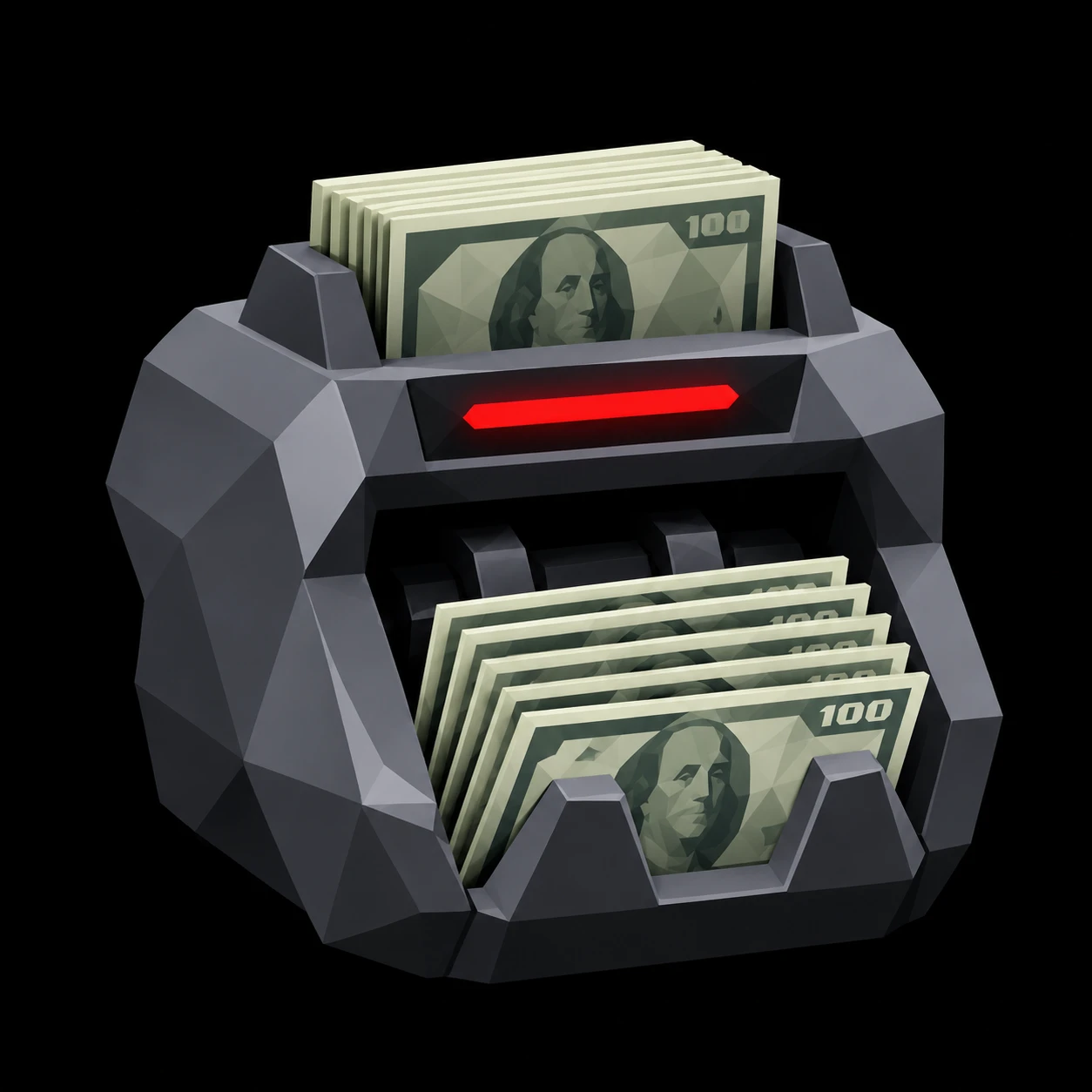
the idea
the printer runs itself.
Every trade of $MIP prints a creator fee. On most coins a wallet quietly pockets it. Here the fee has exactly one job: buy the coin back and destroy it. It is not a roadmap item and not a promise. It is a bot you can watch on Solscan, every 10 seconds, at any hour.
How it works
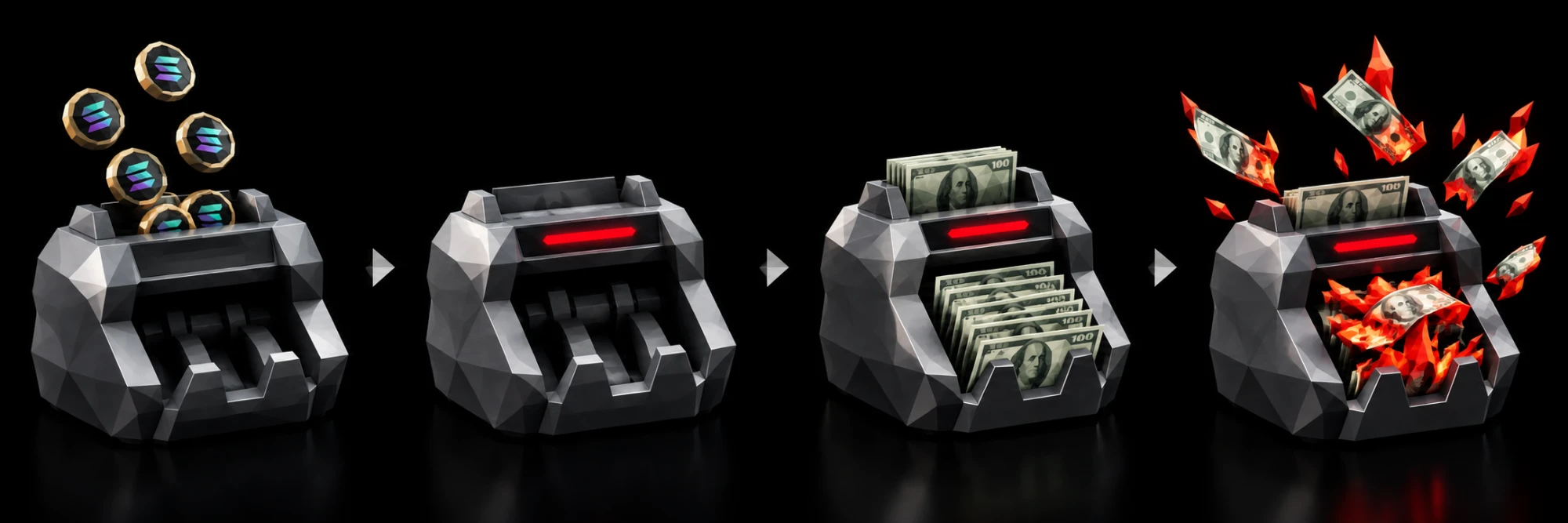
One treasury wallet, one loop, four steps. It runs by itself, around the clock, and every step is a public Solana transaction.
-
01
Trading pays fees
Every buy and sell of $MIP pays a creator fee in SOL, on pump.fun and later on PumpSwap. pump.fun's fee sharing splits it on-chain: 99% to the treasury, 1% to the team wallet.
-
02
The bot claims them
Every 10 seconds the bot checks the fee vault and claims what is there, on-chain, as soon as it is worth the network fee.
-
03
It buys $MIP
All of the SOL the treasury receives market-buys $MIP. Real buy pressure on the chart, paid for by the coin's own volume. The treasury never pays anyone: the split happens before it sees a cent.
-
04
All of it is burned
Right after the buy, the treasury burns 100% of the tokens it holds with an SPL
burninstruction. The total supply of the mint goes down for good.
The team share pays for a DEX profile, marketing and running costs. pump.fun pays it straight to the team wallet, so the bot never handles it.
Why it compounds
Each burn leaves fewer tokens for everyone else. More trading means more fees, more fees mean bigger buybacks, and bigger buybacks remove more supply.
Public wallets, nothing hidden
The treasury does two things only: it buys and it burns. It never sells and never moves $MIP out. The team wallet only ever receives SOL. Both histories are open on Solscan.
Real burn, not a dead wallet
Tokens are not parked at an "incinerator" address that still holds them. They are burned through the token program, so the mint's supply on-chain goes down. The "Supply now" figure is read from the chain.
What the wallet keeps
Only a small SOL reserve (0.02 SOL) for network fees and token-account rent, so transactions never fail for lack of gas. Everything above it goes into the next print.
Round size
A print starts once there is at least 0.01 SOL above the reserve. Very large balances are split into prints of up to 5 SOL so one buy never moves the price too hard.
Sent tokens get burned too
Any $MIP sent to the treasury is burned on the next cycle, exactly like bought tokens. The treasury never holds a balance of its own coin.
Receipts
Every print round comes out of the machine as a receipt. Each line links to its transactions on Solscan.
the first receipt prints as soon as fees come in
FAQ
Does the team take any part of the fees?
1% of creator fees, paid straight to the team wallet shown above by pump.fun's on-chain fee sharing. It covers what a coin needs to exist: a DEX profile, marketing and running costs. The other 99% is always bought back and burned. The split is locked on-chain, and the bot never touches the team share.
No. 100% of creator fees go to the buyback and burn. There is no team wallet in the loop.
Can the treasury sell?
The bot has no sell code: it only claims, buys and burns, and every token it buys is burned right after. Don't take our word for it, open the treasury's transaction history on Solscan and check.
Who controls the treasury wallet?
An automated bot operates it, and the team technically holds its key, so we are not asking you to trust us. Here is what you can check yourself instead. The fee split is locked on-chain: nobody, the team included, can redirect the creator fees. The treasury only claims fees, buys and burns: open its transaction history on Solscan and look for any transfer of SOL or tokens to another wallet. And it keeps almost nothing: everything above a small gas reserve is spent every cycle. Don't trust, verify.
Does a human press anything?
No. The claim, the buy and the burn are all done by a bot on a fixed 10-second loop. If a step fails, the next cycle picks it up from the wallet's on-chain state.
How often do buybacks happen?
The bot checks the fee vault every 10 seconds. A print runs as soon as there is enough SOL to make it worth the network fee, so the pace follows trading volume: busy hours mean frequent burns.
What happens after migration to PumpSwap?
Nothing changes. Creator fees keep coming from the PumpSwap pool and buybacks are routed to the pool automatically.
How do I verify a burn?
Every receipt links to its claim, buy and burn transactions on Solscan. A burn transaction shows a BurnChecked instruction from the treasury, and the token's total supply drops by exactly that amount.